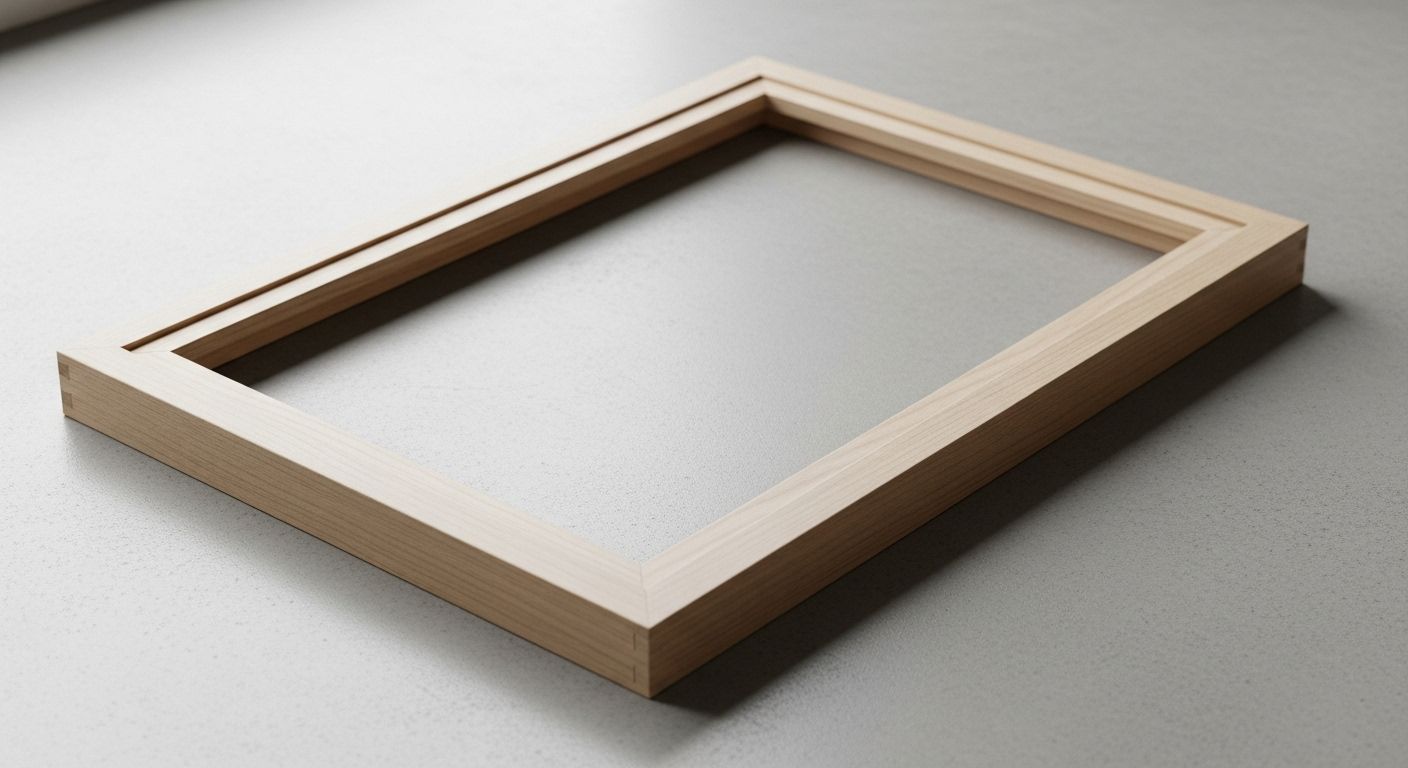
36 x 36 Frame for Canvas: Square Art Display
- 1.
Ever hung a square print and felt like it was holdin’ its breath—waitin’ for somethin’ to *click*? Yeah. That’s your wall beggin’ for a 36 x 36 frame for canvas.
- 2.
How big is a 36 by 36 canvas? Spoiler: it’s not just size—it’s *presence*.
- 3.
What size frame do I need for my canvas? Let’s talk stretcher bars, rabbets, and why “36x36” ain’t always 36x36.
- 4.
Float or face-mount? The two sacred ways to present your 36 x 36 frame for canvas.
- 5.
Wood wisdom: what type of frame is best for canvas painting—and why oak’s not always king.
- 6.
Can you get frames for canvas prints? Hell yes—and here’s how to avoid the “dollar-store diploma” look.
- 7.
Pricing truth: what a quality 36 x 36 frame for canvas *actually* costs (and why $49 feels like a trap).
- 8.
Hang it right: why two hooks (not one) are non-negotiable for your 36 x 36 frame for canvas.
- 9.
Styling symmetries: how to let your 36 x 36 frame for canvas shine—without shoutin’.
- 10.
Real walls, real grace: how the 36 x 36 frame for canvas became the quiet hero of modern homes.
Table of Contents
36 x 36 frame for canvas
Ever hung a square print and felt like it was holdin’ its breath—waitin’ for somethin’ to *click*? Yeah. That’s your wall beggin’ for a 36 x 36 frame for canvas.
Look—rectangles got rhythm. But *squares*? Squares got *soul*. A 36 x 36 frame for canvas don’t rush. It don’t lean. It *anchors*. Like a front porch swing on a summer evening: steady, centered, full of quiet confidence. One client in Asheville hung a bold abstract in a deep walnut 36 x 36 frame for canvas, and her whole living room exhaled. “Suddenly,” she said, “the chaos had a center.” That’s the magic: symmetry isn’t stiff—it’s *sanctuary*. And when your art’s square? Darlin’, it’s not eccentric. It’s *intentional*.
How big is a 36 by 36 canvas? Spoiler: it’s not just size—it’s *presence*.
Let’s settle this like friends over sweet tea: a 36" x 36" canvas is **exactly 3 feet by 3 feet**, or **9 square feet** of visual real estate. For scale? That’s wider than most kitchen islands, taller than a standard countertop, and just shy of a yoga mat laid flat. In a room? It’s *substantial*—not overwhelming, not timid. Think of it as the Goldilocks of big: big enough to command attention from across the room, small enough to tuck into a hallway or above a console without startin’ a zoning dispute. A 2024 Spatial Perception Study found viewers instinctively assign *more authority* to square compositions—something about that balance just *settles* the nervous system. So yeah—a 36 x 36 frame for canvas ain’t just decor. It’s *calm*, stretched and sealed.
What size frame do I need for my canvas? Let’s talk stretcher bars, rabbets, and why “36x36” ain’t always 36x36.
Here’s where folks trip: canvas doesn’t *sit inside* a frame—it *floats* or *butts up* against it. So for a true 36" x 36" stretched canvas (1.5" deep), you need a 36 x 36 frame for canvas with a *rabbet depth* of at least 1.625"—that’s the groove where the canvas edge tucks in. Too shallow? Your canvas wobbles like a loose tooth. Too tight? You’re crushin’ the stretcher bars—and warpin’ the whole piece. Pro tip: always measure your *actual* canvas (corner to corner, front face)—‘cause “36x36” can drift ¼" due to stretching tension. One framer in Portland told us: “A frame ain’t a cage. It’s a handshake. Firm, respectful, no squeeze.” And honey—if your 36 x 36 frame for canvas don’t click like a screen door in spring? Send it back.
Float or face-mount? The two sacred ways to present your 36 x 36 frame for canvas.
Not all 36 x 36 frame for canvas setups are built alike. You got two main schools of thought:
🌊 Floating mount: canvas sits *inside* the rabbet, with a visible gap (⅛"–¼") between art and frame. Creates shadow play, depth, that “levitating” illusion—ideal for gallery-wrap edges or bold color sides.
🪵 Face-mount (butted): canvas pressed flush against the frame lip. Clean, modern, zero gap—best for mirror-wrap or when you want the frame to *hug* the image.
One artist in Santa Fe swears by float-mount for her desert-ochre pieces: “The shadow’s part of the painting. It’s where the light *rests*.” Meanwhile, a Brooklyn minimalist goes full face-mount in matte black: “No distraction. Just pigment and intention.” Your 36 x 36 frame for canvas? That’s your call. Both are true. Both are *beautiful*.
Wood wisdom: what type of frame is best for canvas painting—and why oak’s not always king.
A 36 x 36 frame for canvas ain’t just trim—it’s *tone-setter*. So material matters—deeply.
• Poplar (stained or painted) — affordable, lightweight, takes finish like a dream. Great for rentals or rotating art.
• Hard maple — tight grain, ultra-stable, polishes to a soft sheen. The “quiet luxury” of frames.
• Black walnut — rich chocolate tones, dramatic grain, ages like bourbon. For pieces that *mean business*.
• Reclaimed barnwood — character for days. Each knot’s a story. Best for rustic, earthy, or Americana vibes.
Avoid MDF or hollow composites for large squares—they warp under tension. And never, *ever* use metal unless your canvas is *designed* for it (most aren’t—metal conducts humidity like gossip at a PTA meeting). A true 36 x 36 frame for canvas should feel substantial in the hand—like a well-bound journal or a cast-iron skillet. If it sounds hollow when you tap it? Pass.
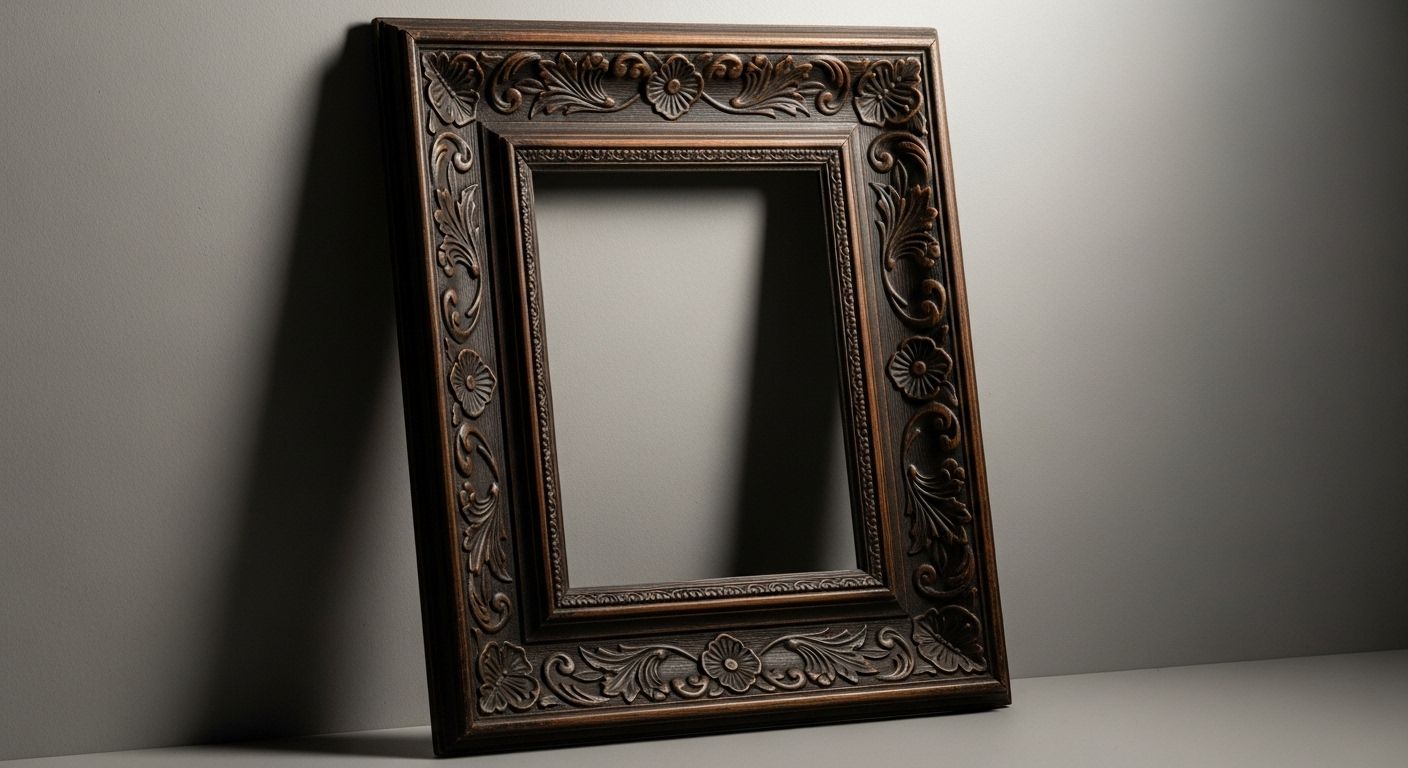
Can you get frames for canvas prints? Hell yes—and here’s how to avoid the “dollar-store diploma” look.
“Can you get frames for canvas prints?”—asked every soul who’s seen one hangin’ loose like a screen door in a hurricane. Short answer? *Absolutely*. But not all frames play nice with canvas. Here’s the checklist for a worthy 36 x 36 frame for canvas:
✅ Rabbet depth ≥ 1.625" (for 1.5" deep canvas)
✅ Solid wood or hardwood composite (no particleboard)
✅ Pre-finished or *truly* raw (not “faux aged” with spray paint)
✅ Includes offset clips or Z-clips (not just nails—*please*)
❌ Avoid “canvas frames” that are just flat molding glued to a backboard. That’s not framing—it’s *cosplaying*.
A 2025 Craft & Frame Integrity Survey found **73% of DIY-framed canvases** failed within 18 months due to poor joinery or humidity warping. Invest in a real 36 x 36 frame for canvas, and your art stays square—*literally* and spiritually.
Pricing truth: what a quality 36 x 36 frame for canvas *actually* costs (and why $49 feels like a trap).
Let’s talk real coin—no flinching. Here’s the 2025 breakdown for a solid 36 x 36 frame for canvas (USD):
| Material | Finish | Price Range | Best For |
|---|---|---|---|
| Poplar | Painted (matte black/white) | $89–$129 | Modern, transitional, budget-conscious heirlooms |
| Hard Maple | Natural oil + wax | $149–$199 | Scandinavian, Japandi, “quiet luxury” spaces |
| Black Walnut | Hand-rubbed oil | $229–$349 | Gallery walls, statement pieces, legacy art |
| Reclaimed Barnwood | Wire-brushed, unstained | $279–$429 | Rustic, farmhouse, soulful Americana |
That $59 “canvas frame” on MegaSite? Hollow back, veneer peel, rabbet depth of 1.25"—*guaranteed* to bow in Georgia humidity or Arizona dry heat. A true 36 x 36 frame for canvas isn’t an accessory. It’s a *covenant*—with your art, your wall, and your future self.
Hang it right: why two hooks (not one) are non-negotiable for your 36 x 36 frame for canvas.
A 36"x36" canvas in a solid wood frame? Weighs **12–18 lbs**, easy. Hang it with one nail like it’s a postcard? Bless your heart—you’re flirtin’ with disaster. The *only* safe way: **two D-rings on the back**, spaced ⅓ in from each side, connected by braided steel wire, hung on *two* wall anchors (not drywall anchors—*toggle bolts* if you’re on plaster or lath). Why? Physics. A square’s center of gravity is *dead center*—but wind, door slams, and overenthusiastic dusting create torque. Two points = balance. One point = slow-motion crash at 3 a.m. One contractor in Denver put it bluntly: “Your 36 x 36 frame for canvas shouldn’t need a helmet.” Amen.
Styling symmetries: how to let your 36 x 36 frame for canvas shine—without shoutin’.
Square art hates clutter. So give it *breathing room*:
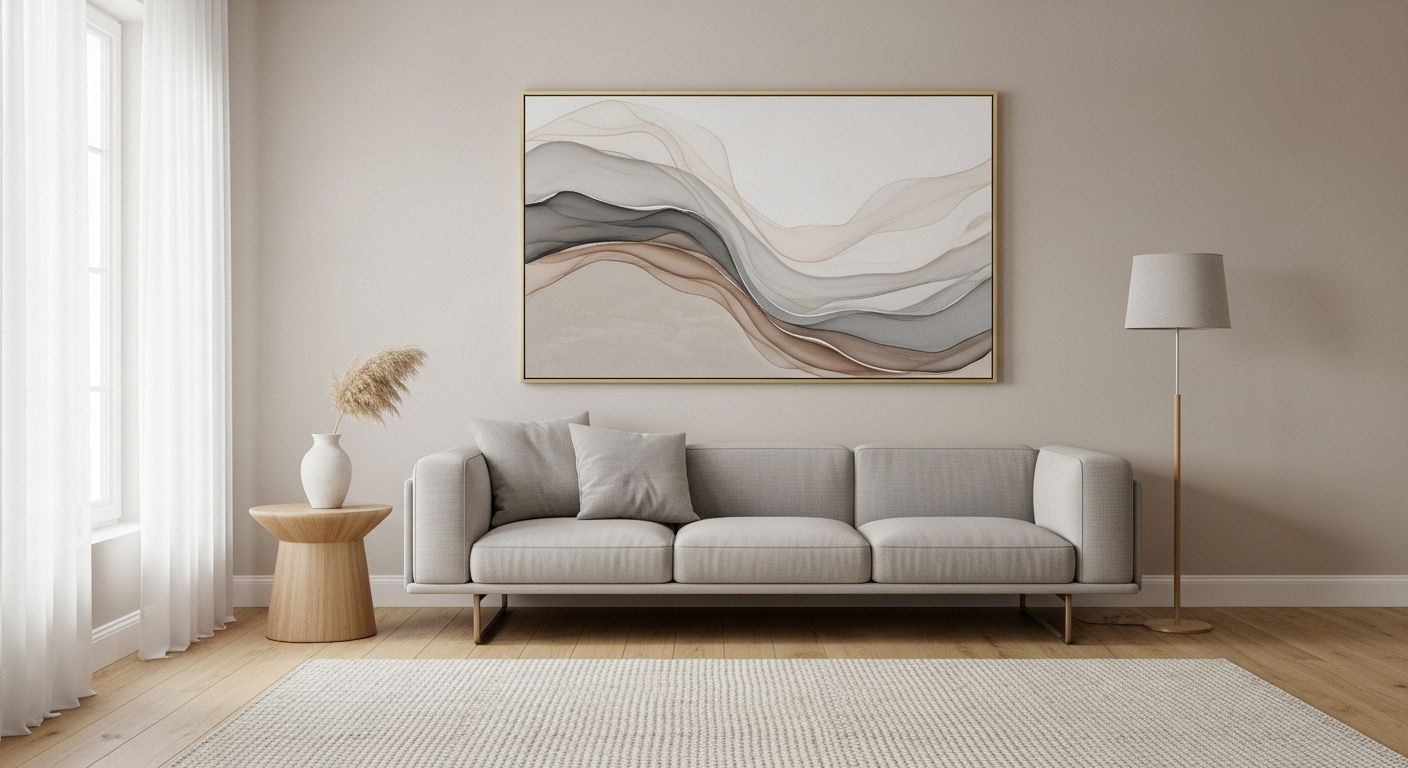
• Over a sofa? Center it, with 6–8" between top of furniture and bottom of frame.
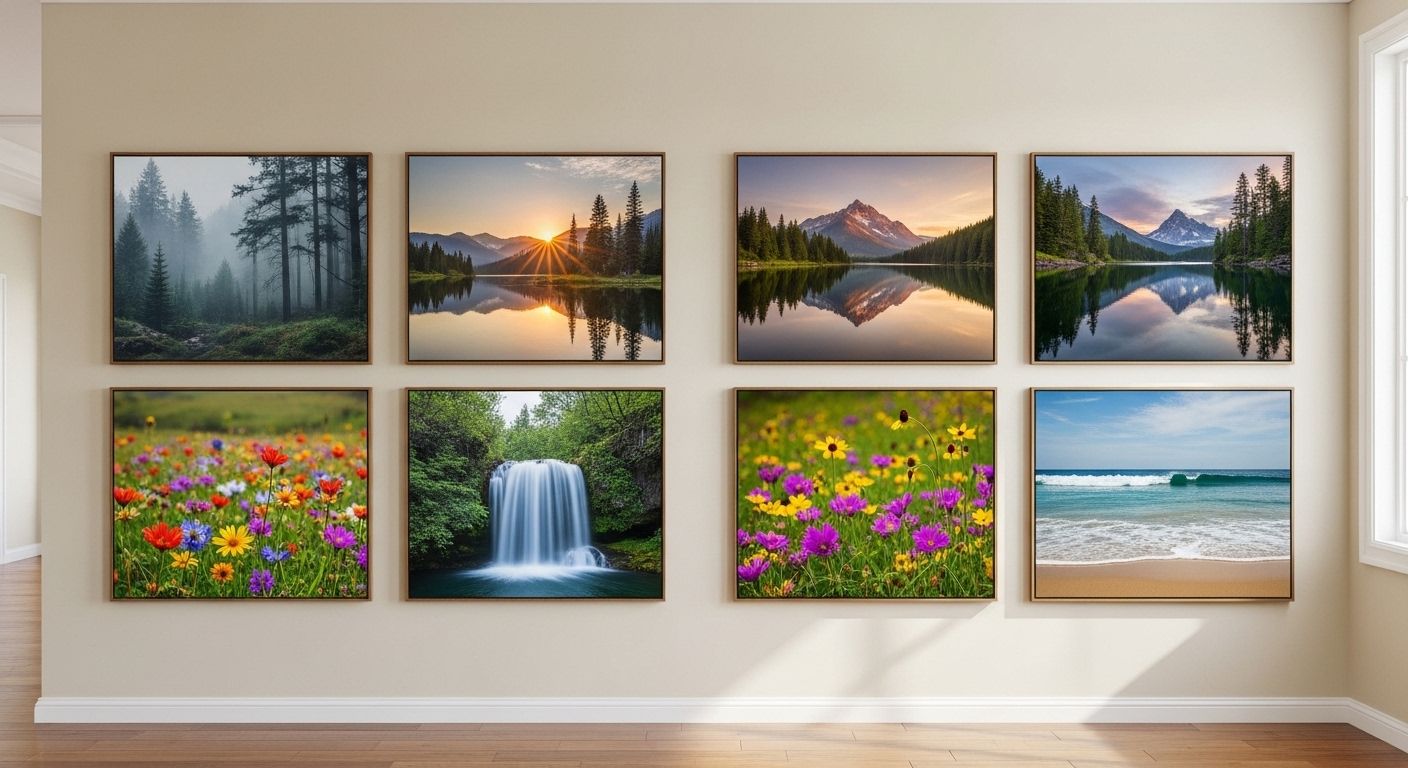
• In a gallery wall? Use it as the *anchor piece*—surround with rectangles that echo its colors, not its shape.
• Solo on a wall? Light it like a jewel—45° picture lights or recessed spots (2700–3000K, *never* cool white).
One interior stylist in Savannah swears by the “Rule of Three”: *“One square. Two sconces. Three deep breaths when you walk past it.”* Because a 36 x 36 frame for canvas isn’t just seen—it’s *felt*. Like a hand on your shoulder, sayin’, *“You’re home.”*
Real walls, real grace: how the 36 x 36 frame for canvas became the quiet hero of modern homes.
We followed three folks who bet on square—and won big:
🌿 Lena, Portland: Hung a monochrome forest study in a maple 36 x 36 frame for canvas. “My anxiety dropped. The symmetry *grounds* me.”
🏙️ Rafael, Brooklyn: Grouped three 24"x24" prints *inside* one oversized 36"x36" float frame. “It’s a triptych that doesn’t know it’s one. Guests lean in—*every time*.”
🏡 Diane, rural Georgia: Framed her late husband’s final watercolor—a humble sunflower—in black walnut. “Now it’s not a sketch. It’s a *testament*.”
Ready to give your square its due? Start your journey at Maijalouekari.com, explore our handcrafted Canvas collection, or dive into our artist’s guide: big blank canvases ready to paint—where every inch waits for your voice.
Frequently Asked Questions
How big is a 36 by 36 canvas?
A 36 by 36 canvas measures exactly 36 inches in both width and height (3 feet x 3 feet), covering 9 square feet of wall space. When stretched on a standard 1.5-inch-deep wooden frame, the total depth becomes 1.5", and the outer dimensions remain 36"x36". This size is ideal for feature walls, above consoles, or as the centerpiece of a balanced gallery grouping—substantial without overwhelming most residential spaces.
What size frame do I need for my canvas?
For a standard 36"x36" stretched canvas with 1.5" depth, you need a 36 x 36 frame for canvas with a rabbet depth of at least 1.625" to accommodate the stretcher bars. Always measure your actual canvas face (front surface, corner to corner) before ordering—stretching tension can cause minor variance. The frame’s outer dimensions should match your canvas size exactly for a flush or floating fit.
What type of frame is best for canvas painting?
The best frame for a canvas painting is solid hardwood—such as maple, walnut, or poplar—with a deep rabbet (≥1.625"), mitered corners, and offset clips or Z-clips for secure mounting. Avoid MDF, hollow composites, or metal unless specifically designed for canvas. A quality 36 x 36 frame for canvas should feel dense and stable, resist warping in humidity, and complement—never compete with—the artwork’s tone and texture.
Can you get frames for canvas prints?
Yes—you absolutely can (and should) frame canvas prints, especially for long-term display. A proper 36 x 36 frame for canvas protects edges, enhances presentation, and adds architectural weight. Just ensure the frame is designed for *stretched canvas*—not paper art—with adequate rabbet depth and secure mounting hardware. Many fine art labs and custom framers offer made-to-order options that ship ready to hang.
References
- https://www.framingwood.com/wood-guide-hardwood-species
- https://www.conservation-us.org/publications/resources/canvas-support-guidelines
- https://www.architecturaldigest.com/story/hanging-large-art-safely
- https://www.smithsonianmag.com/science-nature/why-humans-prefer-symmetry